How to Choose the Right Lip Shade for Your Lip Undertone
Choosing the perfect lipstick is about more than your skin tone. Your natural lip color and undertone can affect how a lipstick looks once you apply it. Learn how to identify your lip undertone and choose shades that complement your natural coloring beautifully.
Introduction
Have you ever tried a lipstick that looked amazing in the tube but completely different on your lips?
You're not alone.
The same lipstick shade can look soft and nude on one person, pinker on another, or warmer and deeper on someone else. One of the reasons is your natural lip color and undertone.
Understanding your lip undertone can make choosing lipstick much easier. Instead of randomly trying dozens of shades, you can narrow your choices based on whether your lips lean cool, warm, neutral, or slightly olive.
Whether you're looking for an everyday nude, a soft pink, a classic red, or a deeper berry shade, understanding your undertone can help you find colors that work naturally with your complexion.
What Is a Lip Undertone?
Your lip undertone is the subtle underlying color that influences how lipstick appears on your lips.
It is different from your overall skin tone.
For example, two people can both have medium or brown skin but have different lip undertones. One person's lips may naturally appear more pink or mauve, while another's may have warmer peach, brown, or reddish tones.
Your natural lip pigmentation also matters. If your lips are naturally darker around the edges or have uneven pigmentation, the same lipstick may appear different compared with someone who has lighter, more even lip color.
How to Identify Your Lip Undertone
Before choosing lipstick, take a close look at your natural lips in natural daylight, preferably without lipstick or tinted lip balm.
1. Look at Your Natural Lip Color
Observe the overall color of your lips.
- Pink, rosy or mauve-looking lips may lean toward a cooler undertone.
- Peach, coral, warm red or brownish lips may indicate a warmer undertone.
- If your lips contain a combination of pink, brown, peach and mauve tones, you may have a neutral undertone.
Remember that natural lip pigmentation can make this difficult to determine, so don't rely on color alone.
2. Check How Different Shades Look
Another easy method is to experiment with different lipstick families.
Try a cool pink and a warm coral side by side.
If cool pinks look more harmonious and natural, you may lean cool.
If warm coral or peach shades blend more naturally with your coloring, you may lean warm.
If both families look equally flattering, you may have a neutral undertone.
Best Lipstick Shades for Cool Undertones
Cool undertones generally pair beautifully with shades that have blue, pink, mauve or berry influences.
Try:
- Dusty rose
- Cool pink
- Mauve
- Raspberry
- Berry
- Plum
- Blue-based red
- Deep wine
For an Everyday Look
A soft rose, mauve or cool pink can give your lips a naturally polished appearance without looking too dramatic.
For a Bold Look
Try berry, plum or a classic cool-toned red when you want more definition.
Best Lipstick Shades for Warm Undertones
Warm undertones often work beautifully with shades containing peach, orange, golden, coral or warm brown influences.
Try:
- Peach nude
- Coral
- Warm pink
- Terracotta
- Cinnamon
- Warm brown
- Brick red
- Orange-red
For an Everyday Look
A warm nude, peach or soft brown can create an effortless everyday makeup look.
For a Bold Look
Coral, brick red and warm red shades can create a striking appearance while maintaining a warm, balanced look.
Best Lipstick Shades for Neutral Undertones
If your lips and complexion don't clearly lean warm or cool, you may have a neutral undertone.
This can give you more flexibility when choosing lipstick.
You can experiment with:
- Rose
- Neutral pink
- Nude brown
- Soft coral
- Mauve
- Classic red
- Berry
- Rose-brown
Neutral undertones can often move between warm and cool lipstick families depending on the makeup look you're creating.
What If Your Lips Are Naturally Dark or Pigmented?
Natural lip pigmentation is completely normal, and it can significantly change the way lipstick appears.
A nude lipstick that looks beige in the tube may appear pinker or browner on naturally pigmented lips.
If your lips are darker, don't automatically assume that you need very dark lipstick.
Instead, look for shades with enough pigment to show up clearly against your natural lip color.
Helpful choices include:
For everyday makeup:
Rose brown, caramel nude, warm mauve and deeper pink.
For a brighter look:
Coral, raspberry, red and berry.
For a deeper look:
Wine, plum, brick red and deep brown-red.
A lip liner in a similar or slightly deeper shade can also help create a more even-looking base.
How to Choose the Right Nude Lipstick
Finding a nude lipstick is one of the trickiest parts of makeup because nude doesn't mean one universal color.
The right nude should complement your natural lip color rather than completely erase it.
Fair to light complexions
Try:
- Pink nude
- Peach nude
- Soft beige
- Rose nude
Medium complexions
Try:
- Caramel nude
- Peach-brown
- Rose brown
- Warm beige
Tan to deeper complexions
Try:
- Brown nude
- Mocha
- Deep rose
- Caramel brown
- Warm berry-brown
The goal is to find a nude that gives your lips definition while still looking natural.
How to Choose the Perfect Red Lipstick
Red lipstick doesn't have to be intimidating.
The trick is understanding the undertone of the red.
Cool Red
Blue or pink-based reds can create a crisp, classic appearance.
Warm Red
Orange, coral or brick-based reds create a warmer effect.
Neutral Red
A balanced red can work beautifully when you're unsure whether you prefer warm or cool tones.
If you're new to red lipstick, start with a shade that isn't extremely bright or extremely deep. Once you understand which direction suits your coloring, you can explore more intense reds.
Don't Choose Lipstick From the Tube Alone
One of the biggest lipstick mistakes is judging a shade only by looking at it in the packaging.
The final color can change because of:
- Natural lip pigmentation
- Lip undertone
- Skin undertone
- Lighting
- Lip dryness
- Number of layers applied
- Lip liner underneath
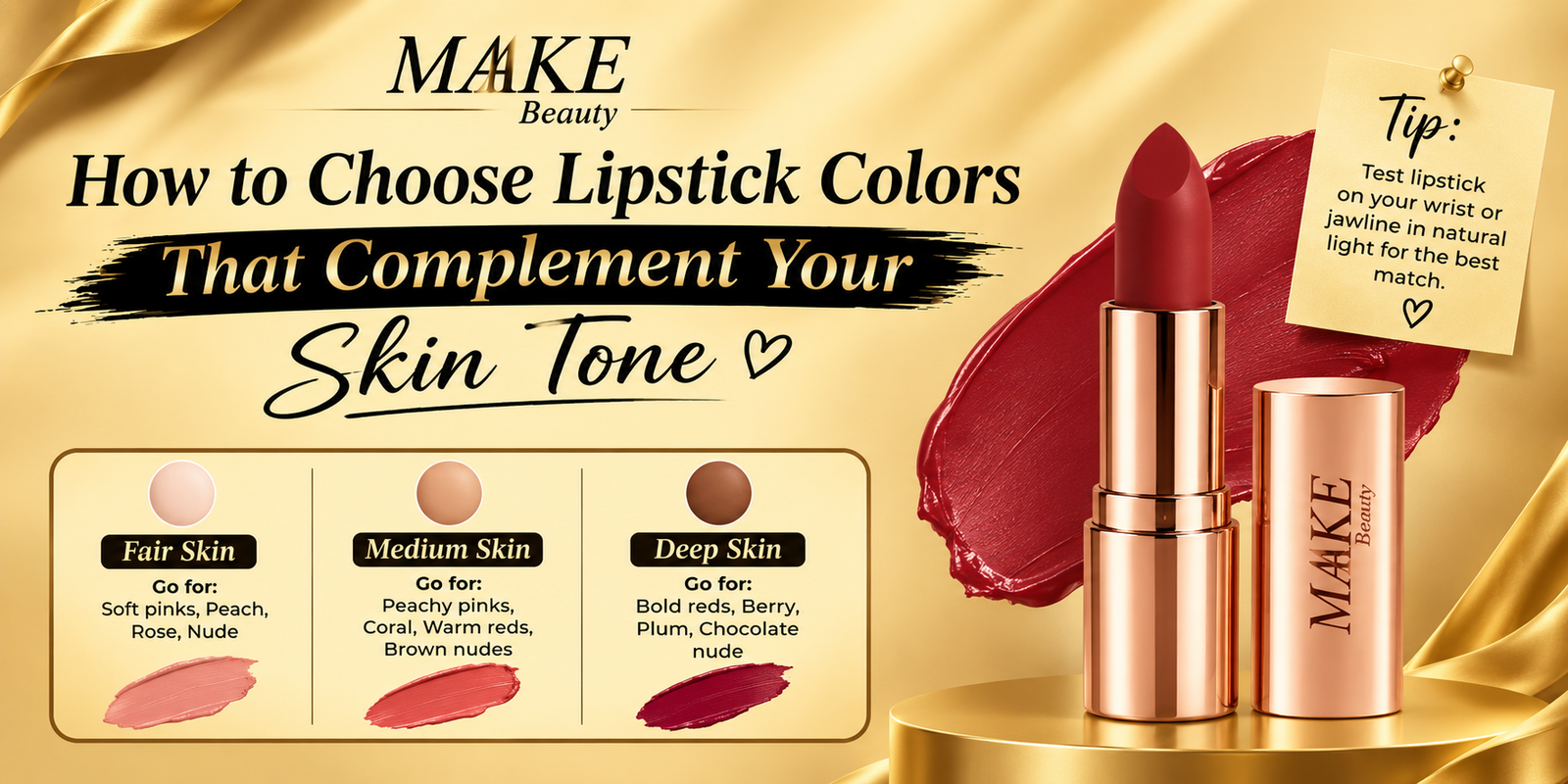
Whenever possible, swatch lipstick directly on your lips or look for real-life swatches on people with similar coloring.
Natural daylight is also much better for judging the true color than strong indoor lighting.
A Simple Lipstick Matching Guide
| Lip Undertone | Shades to Explore |
|---|---|
| Cool | Pink, mauve, raspberry, berry, plum, cool red |
| Warm | Peach, coral, terracotta, warm brown, brick red |
| Neutral | Rose, neutral pink, nude brown, mauve, classic red |
| Naturally Pigmented Lips | Rose brown, berry, brick, wine, deeper nude |
These are starting points rather than strict rules. Makeup is personal, and the best shade is ultimately the one you enjoy wearing.
Your Lipstick Doesn't Have to Match Your Undertone Perfectly
One important thing to remember: makeup has no hard rules.
Your undertone can help you understand why certain colors appear more harmonious, but it shouldn't limit your choices.
Want to wear a bright pink lipstick with a warm undertone? Go for it.
Love a coral shade even though you usually wear cool colors? Try it.
Prefer a deep plum for everyday makeup? That's completely your choice.
Use undertone theory as a guide—not a rulebook.
Build Your Lipstick Collection Around Different Moods
Instead of buying several almost-identical shades, consider creating a small collection with different color families.
Your Everyday Nude
Choose a nude close to your natural lip color.
Your Soft Pink
Perfect for fresh, minimal makeup.
Your Statement Red
Choose either a warm, cool or neutral red depending on your preference.
Your Berry or Wine
Ideal when you want something deeper and more dramatic.
Your Fun Shade
Choose something outside your usual comfort zone—perhaps coral, raspberry or plum.
This gives you options for everyday makeup, work, celebrations, parties and special occasions.
Final Thoughts
Choosing the right lipstick becomes much easier when you understand your natural lip color, lip undertone and skin undertone.
Cool undertones can explore pink, mauve and berry shades. Warm undertones can experiment with peach, coral, terracotta and warm reds. Neutral undertones have the flexibility to explore both warm and cool families.
But remember: there is no single lipstick shade that you are "supposed" to wear.
The perfect lipstick is the shade that makes you feel confident, comfortable and ready to step out.
Explore different colors, experiment with finishes and don't be afraid to try something unexpected.
Your perfect lip shade may be the one you haven't tried yet.
Discover Your Perfect Lip Look with MAAKE Beauty
From everyday nudes and soft pinks to bold reds and deeper berry tones, MAAKE Beauty offers lipstick shades designed to complement different makeup styles and complexions.
Explore your favorite shades and create your signature lip look.