How to Apply Concealer Correctly for a Smooth, Flawless-Looking Finish
Learn how to apply concealer correctly, where to place it, how much to use and how to blend it for a smooth, natural-looking makeup finish.

Concealer is one of the most versatile products in a makeup bag.
It can help even out the appearance of your complexion, brighten the area under your eyes and provide additional coverage exactly where you want it.
But there's one important secret to great concealer application:
You don't need to use a lot.
The right shade, placement and blending technique can make a bigger difference than simply applying more product.
Here's a simple guide to help you get the most out of your concealer.
What Is Concealer Used For?
Concealer is generally used to provide targeted coverage.
You can use it around areas such as:
- Under the eyes
- Around the nose
- Over visible blemishes
- Areas of uneven-looking skin
- Areas where you want additional brightness
Unlike a full-face base product, concealer allows you to focus on specific areas.
This can be especially useful when you're going for a lightweight everyday makeup look.
Step 1: Prepare Your Skin
Good makeup starts with properly prepared skin.
Cleanse your face and follow your normal skincare routine.
If your skin feels dry, use a moisturizer and allow it to absorb.
For daytime makeup, don't forget sunscreen.
Applying concealer over well-prepared skin can help create a smoother-looking finish.
Step 2: Choose the Right Shade
Shade selection matters.
For blemishes and areas where you want coverage, a concealer that closely matches your complexion can help create a more seamless appearance.
For under-eye brightening, some people prefer a slightly lighter shade.
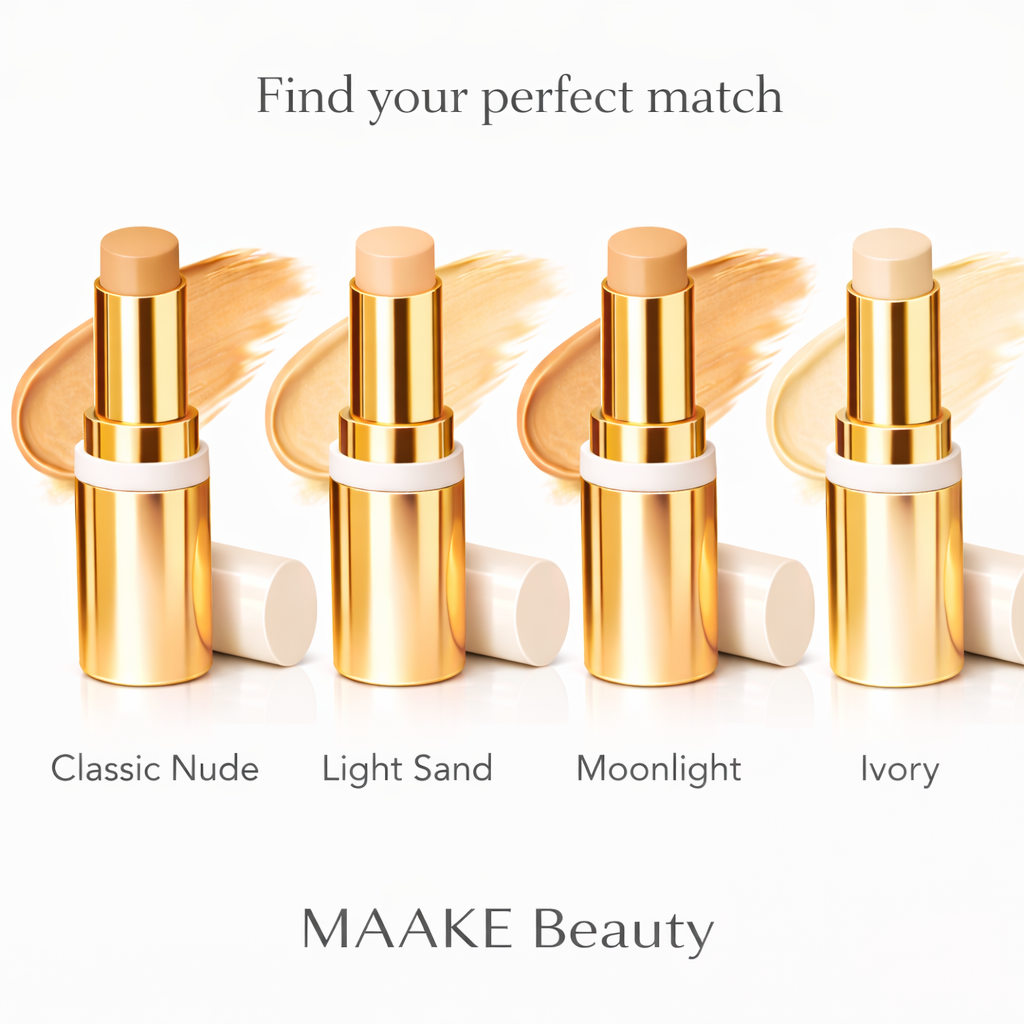
MAAKE BEAUTY currently offers its Concealer Stick in:
- Moonlight
- Classic Nude
- Ivory
- Light Sand
Choose based on your complexion rather than simply choosing the lightest shade.
Step 3: Start With a Small Amount
This is one of the most important tips.
Don't cover your entire face with concealer unless you specifically want a heavier makeup look.
Instead, apply a small amount where you need it.
You can always add another layer.
Starting lightly gives you more control.
Step 4: Apply Under the Eyes
Under-eye concealer can instantly make your makeup look more polished.
Instead of creating a thick stripe underneath the entire eye, try applying small dots or a small amount in the areas that need coverage.
Then blend gently.
The skin around the eyes is delicate, so avoid aggressive rubbing.
Step 5: Cover Blemishes
For blemishes or areas requiring additional coverage, apply a small amount directly to the area.
Let it sit briefly before gently blending the edges.
The goal isn't to completely erase your skin.
The goal is to create a more even-looking appearance while allowing your natural skin to remain believable.
Step 6: Blend the Edges
Blending is what makes concealer look natural.
You can use:
- A makeup sponge
- A concealer brush
- Your clean fingertips
Use gentle tapping motions rather than aggressively rubbing the product.
Pay particular attention to the edges.
You want the concealer to transition naturally into the surrounding skin.
Step 7: Build Coverage Slowly
If you still need more coverage after the first layer, add a small amount.
This technique is better than applying a thick layer immediately.
Think:
Thin layer → Blend → Check → Build if necessary
This helps prevent your makeup from becoming unnecessarily heavy.
Should You Apply Concealer Before or After Foundation?
There isn't one universal rule.
Some people prefer concealer after foundation because the foundation has already provided some coverage.
Others use concealer before foundation for targeted correction.
For a simple everyday routine, try your foundation or base first and then use concealer where additional coverage is needed.
However, makeup is personal, so experiment with both approaches.
Common Concealer Mistakes
Using too much
Heavy concealer can emphasize texture instead of creating a smoother appearance.
Choosing a shade that's too light
A concealer that is dramatically lighter than your complexion can make the under-eye area look unnatural.
Not blending the edges
Even a well-matched concealer can look obvious if the edges aren't blended.
Applying on dry skin
If the area is particularly dry, makeup can emphasize that dryness.
Rubbing instead of tapping
Gentle tapping generally provides more control and helps keep the product where you applied it.
How to Make Concealer Look More Natural
Try these simple techniques:
Use less product.
Blend gradually.
Choose a suitable shade.
Prepare your skin.
Build coverage instead of applying a thick layer.
These small changes can make a noticeable difference.
Creating an Everyday Face With Concealer
For a quick everyday look, you can combine concealer with blush.
Apply concealer only where you want additional coverage.
Then add a small amount of blush to bring colour back into the face.
MAAKE BEAUTY offers Blush Stick shades including Peachy Melon, Crimson Berry and Very Berry.
Finish with mascara, eyeliner or kajal and your favourite lipstick for a complete look.
Final Thoughts
Concealer doesn't have to look heavy to be effective.
The best application often comes down to using the right amount in the right places and blending it properly.
Start small, build gradually and take the time to understand what works for your complexion.
With practice, concealer can become one of the easiest products in your makeup routine.
The goal isn't perfect-looking skin. It's skin that still looks like you—just beautifully enhanced.
Gallery